I've Been Playing Mobile RPGs for Years — Here's What Still Holds Up in 2026
The best mobile RPGs and mobile RPG games of 2026 deliver unforgettable stories, strategic combat, sprawling worlds, and addictive replayability.
I have spent an embarrassing amount of my adult life staring at a phone screen while pretending to be busy, and I regret almost none of it. RPGs have always been my genre of choice — from the dusty old days of Wasteland and Final Fantasy right through to Baldur's Gate 3 and Elden Ring — and somewhere along the way, the phone in my pocket quietly became one of the best places to actually play them. Isn't it strange how that happened without most of us noticing?
The genre has splintered beautifully over the years: JRPGs, ARPGs, CRPGs, soulslikes, gacha-driven epics. Mobile has absorbed all of it. Some of these games are vast open worlds, some are linear and focused, some live and die by combat, and others drown you in story until you forget what time it is. Here is what I keep coming back to as 2026 rolls on.

🎲 SaGa Emerald Beyond — The Cult Classic That Rewards Replay
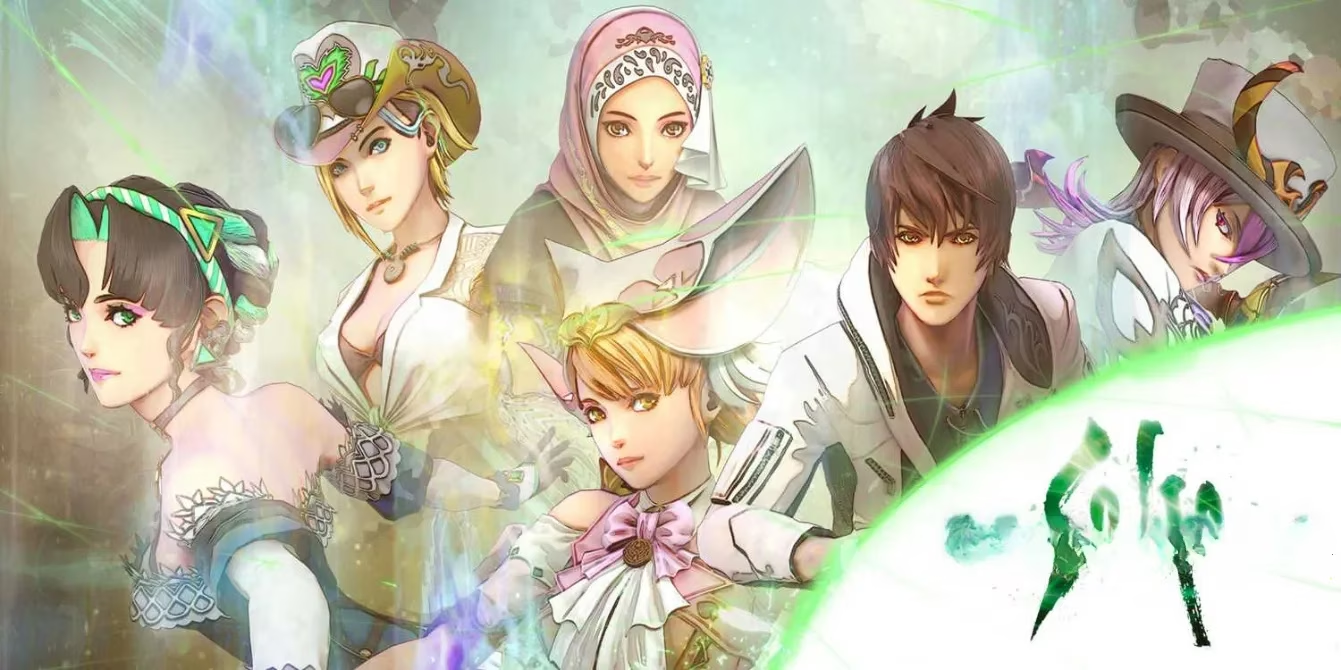
Square Enix has an absurdly deep history with JRPGs, and the SaGa series has always been the weird, wonderful cousin of the family. SaGa Emerald Beyond landed on mobile in 2024, and it remains one of my favourite turn-based experiments on the platform.
Combat runs on a turn-based system with an action resource, but the real hook is positioning. Party formation changes everything. Characters can combine attacks into a single devastating chain, or one character can unleash an entire sequence of hits alone. And then there's the narrative structure — you pick which worlds to visit, and that choice reshapes the story in your next playthrough. How many mobile games actually ask you to replay them to see the full picture?
📖 Blue Archive — Story First, Bullets Second
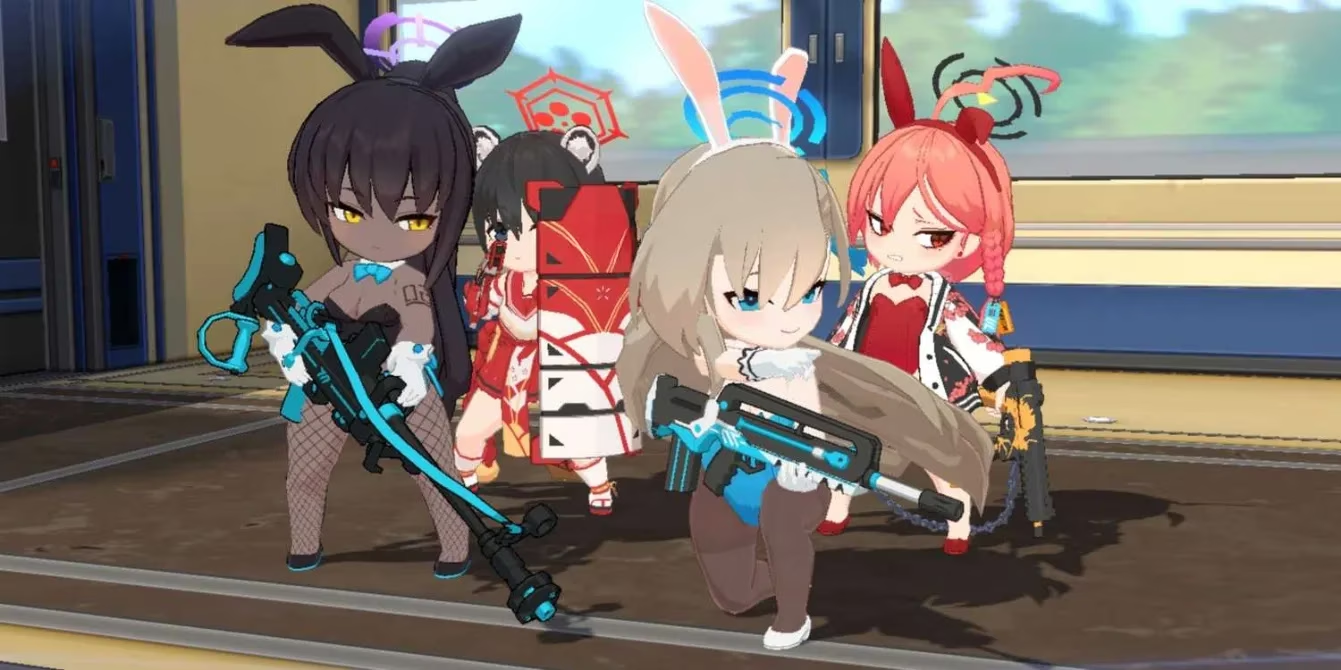
Gacha games dominate mobile for a reason, and Blue Archive is one of the slickest examples I have played. You build a squad from two unit types: Strikers, who handle the damage automatically, and Specials, who support them from the backline. Your input comes through skills rather than micromanagement — a design choice that fits a bus commute perfectly.
The real meat, though, is the story. It is delivered like a visual novel across multiple volumes, and it is genuinely well written. I will admit I have missed my stop because of this game. Twice.
💔 Heaven Burns Red — 48 Characters and a Lot of Feelings
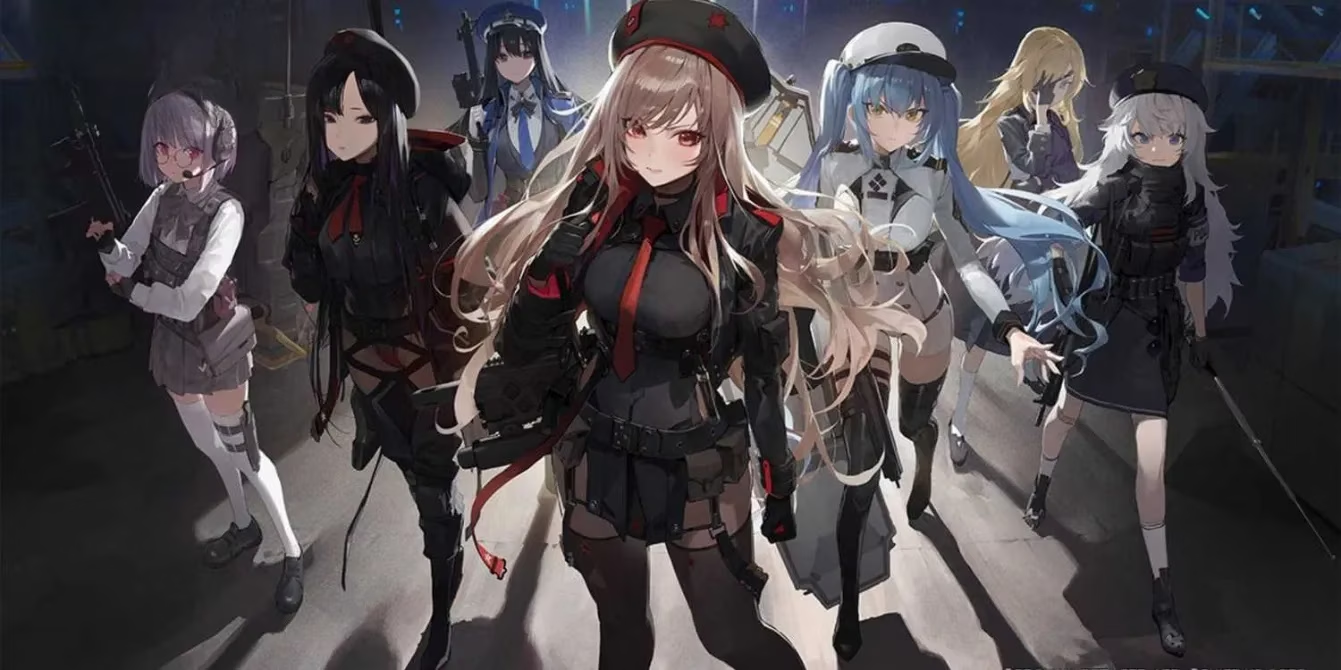
Slower, more deliberate games simply control better on a touchscreen, and Heaven Burns Red understands this. It is turn-based, told through a visual novel lens, and pits you against hostile extraterrestrials.
You have 48 characters to build teams from. Combat will feel instantly familiar to anyone who has touched Final Fantasy or Persona: you take a turn, the enemy takes a turn. Weapon properties, elemental types, shields, and skills all matter. It is comfort food, executed with real polish.

🎯 Goddess of Victory: Nikke — Proof That Shooters Can Work on Mobile
Hardcore games ported to phones often feel like a punishment. Nikke sidesteps that entirely by building its third-person shooting around touch controls rather than fighting them. You drag your reticule over enemies, duck behind cover to avoid incoming fire, and watch that cover crumble if you lean on it too long.
Five characters fight at once, and elemental strengths and weaknesses keep team-building interesting. It is loud, it is stylish, and it just works.
🚄 Honkai: Star Rail — The JRPG Comfort Blanket
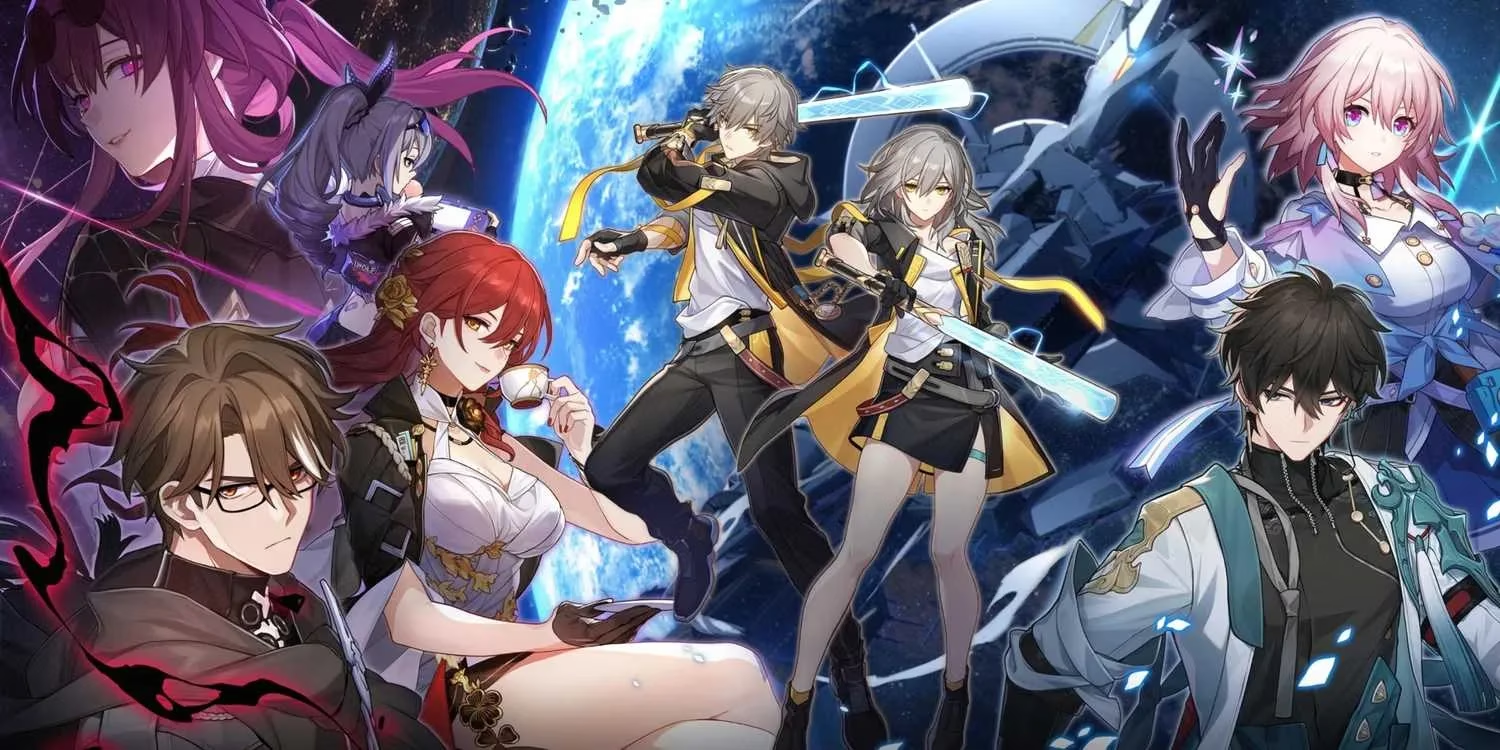
Final Fantasy may be the most famous name in JRPGs, but newcomers like Octopath Traveler and Honkai: Star Rail have carved out serious territory. Star Rail uses classic turn-based combat with four party members, each with distinct combat types, classes, and abilities.
What sets it apart for me is the setting. Instead of fantasy, you get a sci-fi narrative that feels deliberately distinct from HoYoverse's other titles. It is the game I recommend to anyone who says they do not have time for a big RPG.
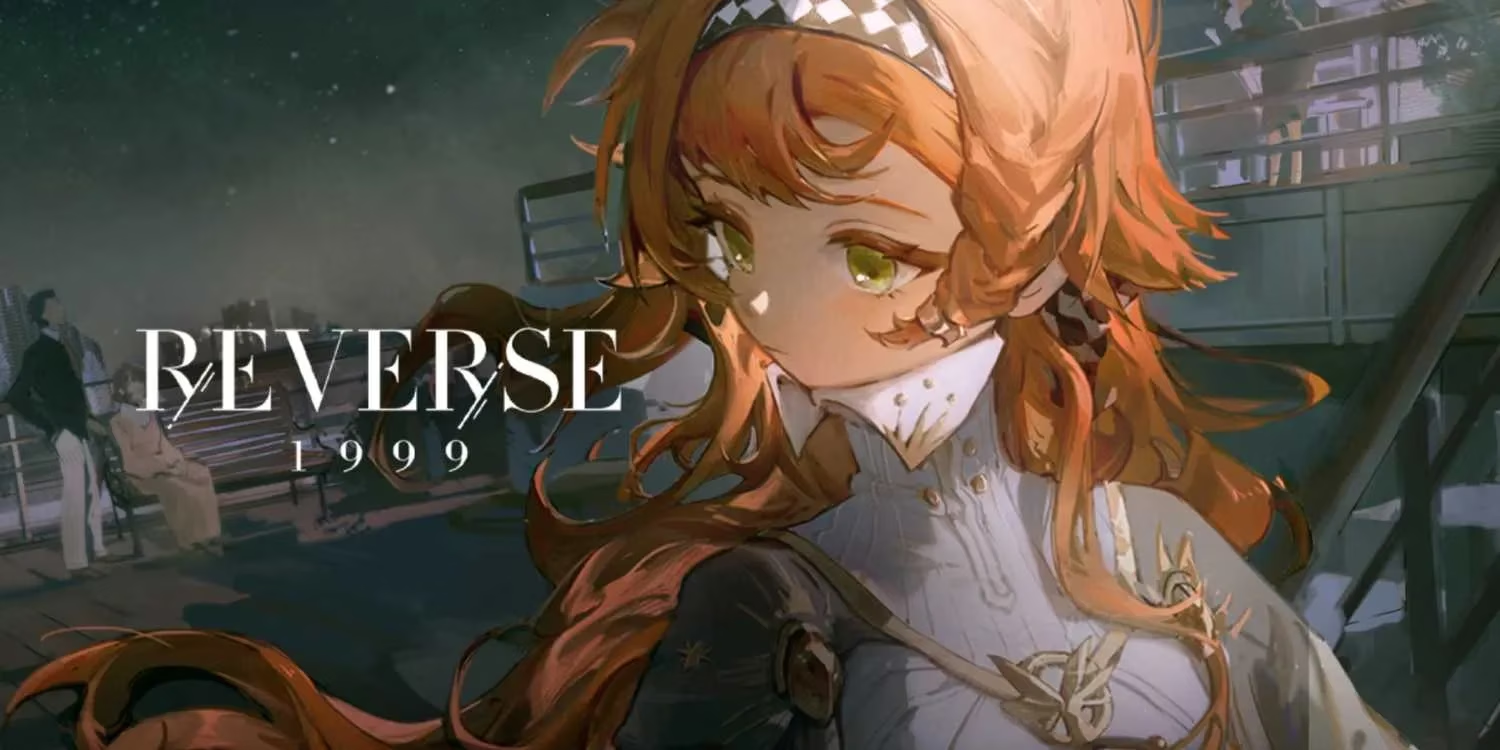
🃏 Reverse: 1999 — A Card System With Actual Depth
Anime-styled mobile games lean hard on narrative, and Reverse: 1999 is no exception. The story is the star. Combat is turn-based, built around cards you use to cast incantations — damage, buffs, debuffs, ultimates — and those cards carry their own unique effects.
Incantations can be upgraded and come in varying star levels, from one star up to three. It sounds fiddly on paper. In practice, it is one of the most satisfying card systems I have used on a phone.
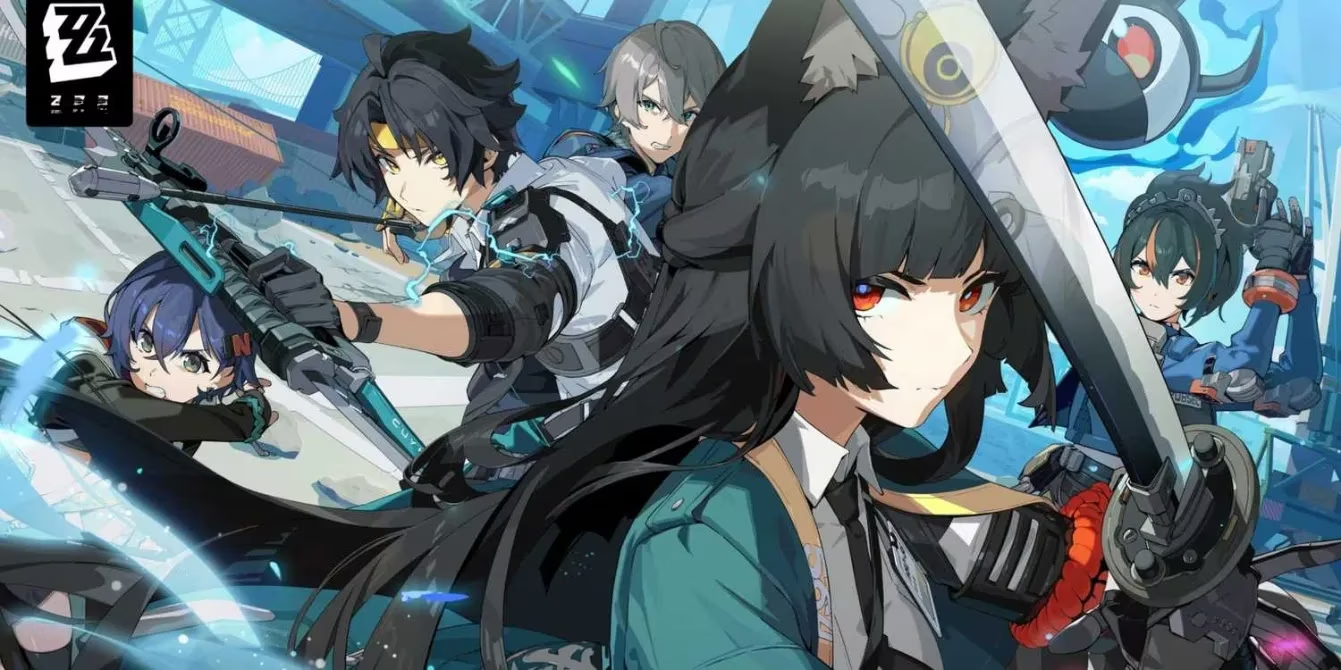
⚡ Zenless Zone Zero — HoYoverse at Its Most Animated
HoYoverse exploded with Genshin Impact and kept going with Star Rail and Zenless Zone Zero. ZZZ is arguably their most distinctive release: phenomenal animation, energetic characters, and combat that borders on addictive.
The world is supposedly on the brink of ending, yet everyone in it bounces around like they are at a festival. Dodging, parrying, combos, and team synergy make every fight feel like a highlight reel. Honestly, why has nobody greenlit an animated series at this quality level?
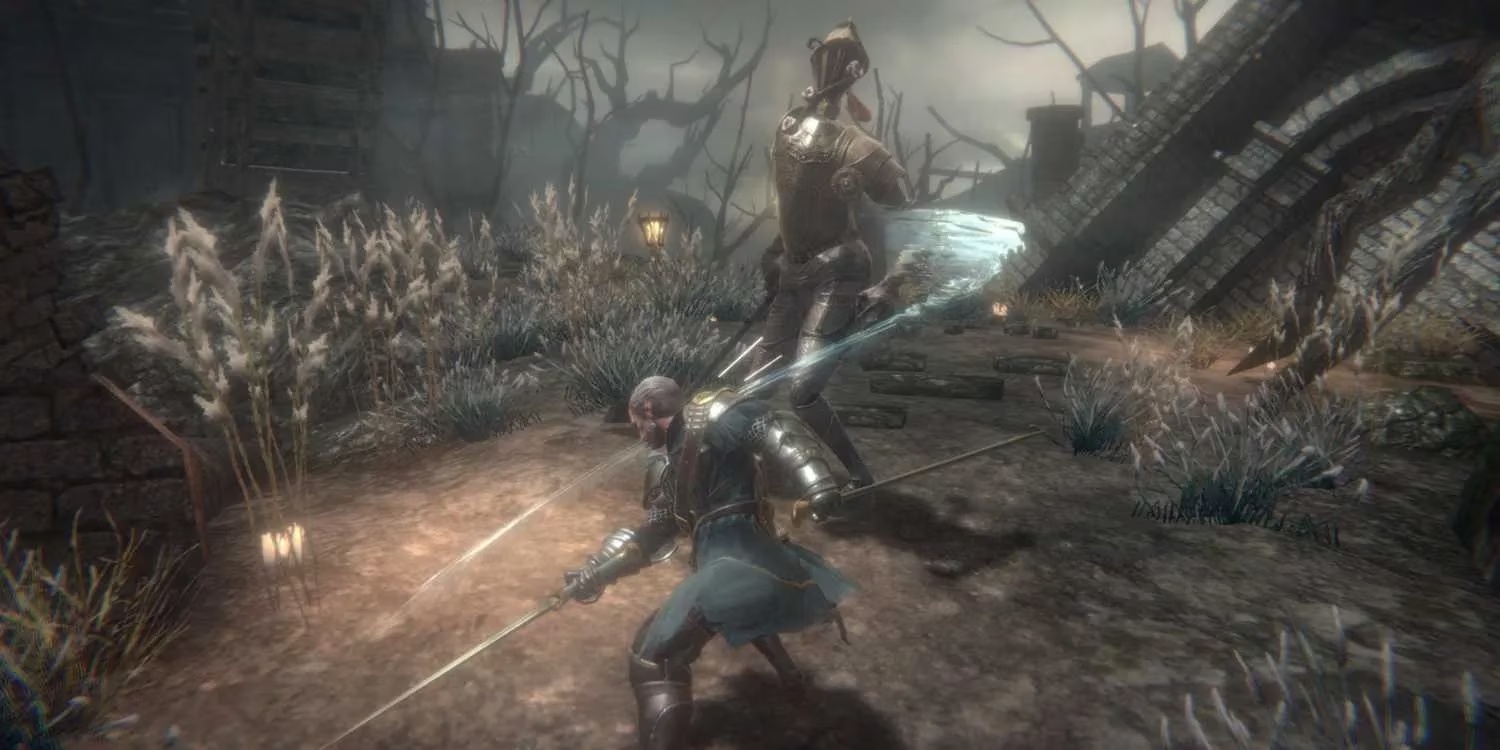
🗡️ Pascal's Wager — A Soulslike in Your Pocket
Soulslikes were massive long before Elden Ring, and Pascal's Wager brings that punishing formula to mobile. Bleak world? Check. Brutal enemies and bosses? Check. A cast of strange NPCs and currency that vanishes when you die? Also check.
It is remarkable how little it compromises. If you have ever wanted that particular flavour of suffering on a commute, here it is.
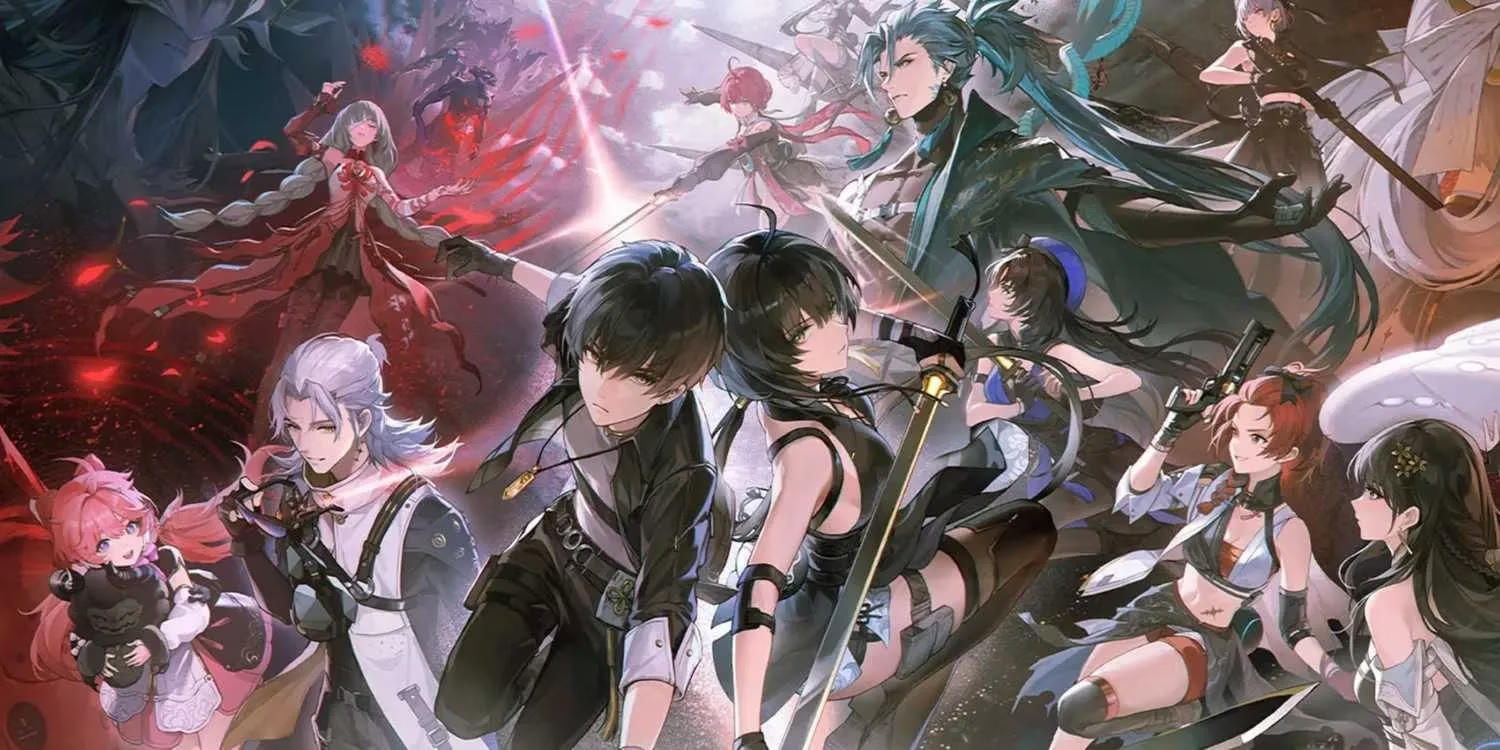
🌊 Wuthering Waves — Combat Over Everything
Genshin Impact opened the door in 2020 for enormous open-world RPGs on mobile, and plenty of studios have tried to walk through it. Wuthering Waves is the one that stuck. Yes, it shares DNA with Genshin, but the emphasis sits squarely on combat. Parries and dodges keep you alive and engaged, and the map is enormous enough to swallow entire weekends.
🌍 Genshin Impact — Still the Benchmark
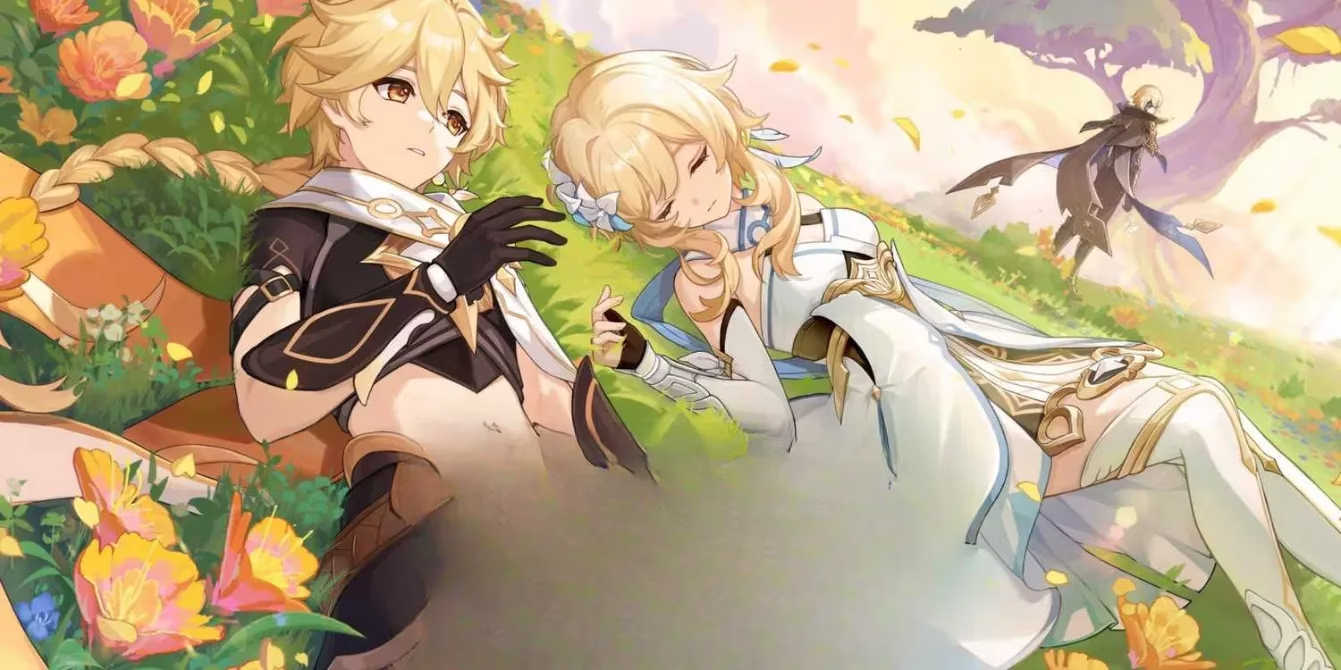
Years on, Genshin Impact remains a monster. You travel the world chasing the main story, trying to reunite with your sibling while helping the nations you pass through. Combat runs on a four-member party using elemental reactions — electricity, fire, water, and more — layered on top of each character's individual skills, whether that means damage, buffs, or support.
It has been updated, expanded, and refined so many times that newcomers face a genuinely intimidating amount of content. Is that a problem or a gift? I think it depends entirely on how much free time you have.
📊 Quick Comparison
| Game | Combat Style | Best For |
|---|---|---|
| SaGa Emerald Beyond | Turn-based, positional | Replay-focused JRPG fans |
| Blue Archive | Auto-battler with skills | Story lovers |
| Heaven Burns Red | Turn-based | Persona and Final Fantasy veterans |
| Goddess of Victory: Nikke | Third-person shooter | Action on the go |
| Honkai: Star Rail | Turn-based, 4-party | Sci-fi JRPG fans |
| Reverse: 1999 | Card-based | Tactical thinkers |
| Zenless Zone Zero | Action, combo-heavy | Animation and spectacle |
| Pascal's Wager | Soulslike action | Masochists (affectionate) |
| Wuthering Waves | Action RPG | Open-world explorers |
| Genshin Impact | Elemental action RPG | Everyone, eventually |
🎮 Final Thoughts
Mobile RPGs are no longer the compromise option. Whether you want a soulslike that punishes you, a visual novel that makes you cry on public transport, or an open world that eats your evenings whole, there is something here worth your time in 2026. The only real question left is which one you install first.